What are the Popular Models of Capacitor Calculation?
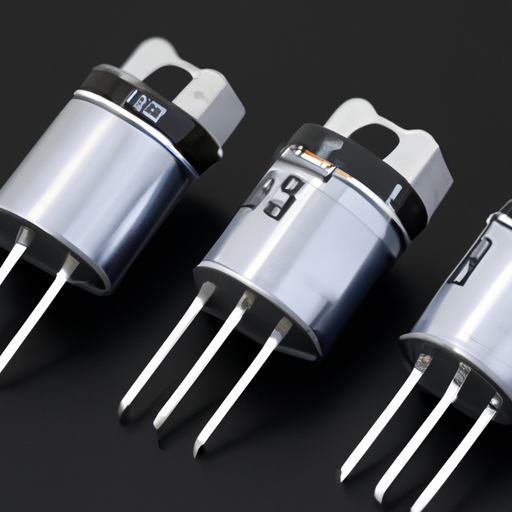
I. Introduction
Capacitors are fundamental components in electrical engineering, playing a crucial role in various applications, from power supply circuits to signal processing. Understanding how to calculate the values and behaviors of capacitors is essential for engineers and technicians alike. This article will explore popular models of capacitor calculation, providing insights into both basic and advanced concepts, specialized types, and practical applications.
II. Basic Concepts of Capacitors
A. What is a Capacitor?
A capacitor is a two-terminal passive electronic component that stores electrical energy in an electric field. It consists of two conductive plates separated by an insulating material known as a dielectric. When a voltage is applied across the plates, an electric field is created, allowing the capacitor to store charge.
1. Structure and Function
The basic structure of a capacitor includes two conductive plates and a dielectric material. The dielectric can be made from various materials, including ceramic, plastic, or electrolytic substances. The function of a capacitor is to store and release electrical energy, making it essential in filtering, timing, and energy storage applications.
2. Types of Capacitors
Capacitors come in various types, including:
Electrolytic Capacitors: Known for their high capacitance values, these capacitors are polarized and often used in power supply applications.
Ceramic Capacitors: These are non-polarized capacitors with a wide range of capacitance values, commonly used in high-frequency applications.
Tantalum Capacitors: These capacitors offer stable capacitance and are used in applications requiring reliability and compact size.
B. Key Parameters
Understanding the key parameters of capacitors is vital for accurate calculations:
1. Capacitance
Capacitance (C) is the ability of a capacitor to store charge per unit voltage, measured in farads (F). The basic formula for capacitance is:
\[ C = \frac{Q}{V} \]
where \( Q \) is the charge stored in coulombs, and \( V \) is the voltage across the capacitor.
2. Voltage Rating
The voltage rating indicates the maximum voltage a capacitor can handle without breaking down. Exceeding this voltage can lead to failure or damage.
3. Equivalent Series Resistance (ESR)
ESR is a measure of the resistive losses in a capacitor, affecting its efficiency and performance, especially in high-frequency applications.
4. Equivalent Series Inductance (ESL)
ESL represents the inductive effects in a capacitor, which can influence its behavior in AC circuits.
III. Fundamental Capacitor Calculation Models
A. Ideal Capacitor Model
The ideal capacitor model assumes a perfect capacitor with no losses or parasitic elements. The basic formula for capacitance remains:
\[ C = \frac{Q}{V} \]
1. Applications and Limitations
While the ideal model is useful for basic calculations, it does not account for real-world factors such as ESR and ESL, which can significantly impact performance in practical applications.
B. Non-Ideal Capacitor Model
The non-ideal capacitor model incorporates real-world factors that affect capacitor performance.
1. Introduction to Real-World Factors
In practice, capacitors exhibit non-ideal behaviors due to parasitic elements, including ESR and ESL. These factors can lead to energy losses and affect the frequency response of circuits.
2. Impact of ESR and ESL on Performance
High ESR can lead to overheating and reduced efficiency, while ESL can cause phase shifts and resonance issues in AC applications. Understanding these parameters is crucial for accurate capacitor calculations.
IV. Advanced Capacitor Calculation Models
A. Thevenin and Norton Equivalent Circuits
Thevenin and Norton theorems are essential tools for analyzing circuits with capacitors.
1. Thevenin’s Theorem
Thevenin’s theorem states that any linear circuit can be simplified to a single voltage source and series resistance. This simplification is useful for analyzing circuits with capacitors.
2. Norton’s Theorem
Norton’s theorem is similar but represents the circuit as a current source in parallel with a resistance. Both theorems facilitate easier calculations involving capacitors in complex circuits.
B. AC Analysis of Capacitors
Capacitors behave differently in AC circuits compared to DC circuits.
1. Impedance in AC Circuits
The impedance (Z) of a capacitor in an AC circuit is given by:
\[ Z = \frac{1}{j\omega C} \]
where \( j \) is the imaginary unit and \( \omega \) is the angular frequency. This formula highlights how capacitors impede AC signals, with the impedance decreasing as frequency increases.
2. Phase Angle Considerations
In AC circuits, capacitors introduce a phase shift between voltage and current. The phase angle (\( \phi \)) can be calculated using:
\[ \phi = -\tan^{-1}\left(\frac{1}{\omega C R}\right) \]
where \( R \) is the resistance in the circuit.
C. Frequency Response Models
Understanding how capacitors respond to different frequencies is crucial for designing effective circuits.
1. Bode Plots
Bode plots are graphical representations of a system's frequency response, showing how gain and phase shift vary with frequency. They are essential for analyzing the behavior of capacitors in filters and amplifiers.
2. Resonance and Damping
Capacitors can create resonant circuits when combined with inductors. Understanding resonance and damping is vital for designing circuits that operate efficiently at specific frequencies.
V. Specialized Capacitor Models
A. Electrolytic Capacitors
Electrolytic capacitors are widely used due to their high capacitance values.
1. Characteristics and Applications
These capacitors are polarized and typically used in power supply circuits, audio applications, and energy storage systems.
2. Calculation Considerations
When calculating values for electrolytic capacitors, it’s essential to consider their voltage rating and ESR, as these factors can significantly impact performance.
B. Ceramic Capacitors
Ceramic capacitors are known for their stability and reliability.
1. Types and Properties
They come in various types, including Class 1 (temperature stable) and Class 2 (high capacitance). Each type has unique properties that affect their applications.
2. Calculation Models
Calculating values for ceramic capacitors involves considering their capacitance, voltage rating, and temperature coefficients.
C. Tantalum Capacitors
Tantalum capacitors offer high capacitance in a small package.
1. Advantages and Disadvantages
They are stable and reliable but can be more expensive than other types. Their failure modes can also be catastrophic if not used within specified limits.
2. Calculation Techniques
When calculating values for tantalum capacitors, it’s crucial to consider their voltage rating and ESR, as these factors can influence circuit performance.
VI. Simulation and Software Tools for Capacitor Calculation
A. Overview of Simulation Software
Simulation tools are invaluable for analyzing capacitor behavior in circuits.
1. SPICE
SPICE (Simulation Program with Integrated Circuit Emphasis) is a widely used tool for simulating electronic circuits, including capacitors.
2. MATLAB
MATLAB offers powerful tools for analyzing and simulating capacitor behavior, particularly in complex systems.
3. LTspice
LTspice is a free simulation software that provides a user-friendly interface for simulating circuits with capacitors.
B. Benefits of Using Simulation Tools
1. Accuracy
Simulation tools allow for precise calculations and predictions of capacitor behavior in various scenarios.
2. Time Efficiency
Using simulation software can significantly reduce the time required for circuit analysis and design.
3. Complex Circuit Analysis
Simulation tools enable engineers to analyze complex circuits that would be challenging to calculate manually.
VII. Practical Applications of Capacitor Calculation
Capacitor calculations are essential in various practical applications:
A. Power Supply Design
Capacitors are crucial in smoothing out voltage fluctuations in power supply circuits, ensuring stable operation.
B. Signal Processing
In signal processing, capacitors are used in filters to remove unwanted frequencies and enhance signal quality.
C. Filtering Applications
Capacitors play a vital role in filtering applications, such as in audio equipment and communication systems, where they help eliminate noise and improve performance.
D. Energy Storage Systems
Capacitors are used in energy storage systems, providing quick bursts of energy when needed, such as in electric vehicles and renewable energy systems.
VIII. Conclusion
In summary, understanding the popular models of capacitor calculation is essential for anyone working in electrical engineering. From basic concepts to advanced models and specialized types, accurate capacitor calculations are crucial for designing efficient and reliable circuits. As technology continues to evolve, staying informed about the latest trends in capacitor technology and calculation models will be vital for engineers and technicians alike.
IX. References
- Academic Journals on Electrical Engineering
- Textbooks on Circuit Analysis and Design
- Online Resources and Tutorials on Capacitor Theory and Applications
This comprehensive overview of capacitor calculation models provides a solid foundation for understanding their importance in electrical engineering and practical applications. Whether you are a student, engineer, or hobbyist, mastering these concepts will enhance your ability to design and analyze electronic circuits effectively.


