The Latest Capacitors and Capacitor Specifications
I. Introduction
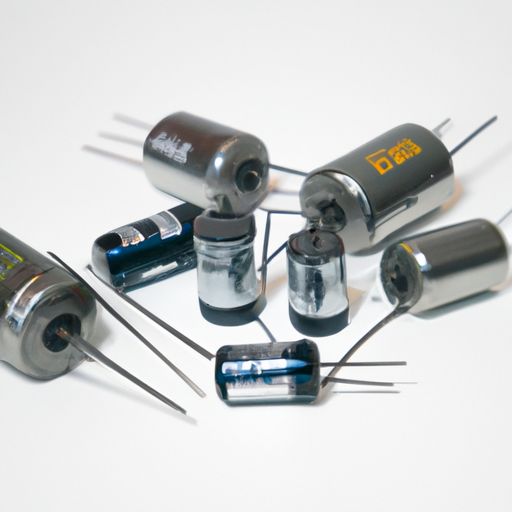
Capacitors are fundamental components in electronic circuits, serving as energy storage devices that can release energy when needed. They play a crucial role in various applications, from filtering signals to stabilizing voltage levels. As technology advances, the demand for more efficient and reliable capacitors has led to significant innovations in their design and materials. This article aims to provide an overview of the latest types of capacitors, their specifications, recent technological advancements, and their applications in modern electronics.
II. Types of Capacitors
Capacitors come in various types, each with unique characteristics and applications. Understanding these types is essential for selecting the right capacitor for specific needs.
A. Ceramic Capacitors
Ceramic capacitors are among the most widely used capacitors due to their small size, low cost, and reliability. They are made from ceramic materials and are available in various capacitance values.
**Characteristics:** Ceramic capacitors have a high dielectric strength and can operate at high temperatures. They are non-polarized, meaning they can be connected in any direction in a circuit.
**Applications:** Commonly found in decoupling and filtering applications, ceramic capacitors are used in consumer electronics, automotive systems, and telecommunications.
B. Electrolytic Capacitors
Electrolytic capacitors are polarized capacitors that offer high capacitance values in a relatively small package. They are constructed using an electrolyte, which allows for a larger surface area.
**Characteristics:** These capacitors have a higher capacitance per volume compared to other types but are limited by their voltage ratings and polarity.
**Applications:** Electrolytic capacitors are often used in power supply circuits, audio equipment, and energy storage applications.
C. Film Capacitors
Film capacitors use a thin plastic film as the dielectric material. They are known for their stability and low loss characteristics.
**Characteristics:** Film capacitors have excellent temperature stability and low equivalent series resistance (ESR), making them suitable for high-frequency applications.
**Applications:** They are commonly used in audio equipment, power electronics, and timing circuits.
D. Tantalum Capacitors
Tantalum capacitors are another type of electrolytic capacitor, known for their high capacitance and reliability. They use tantalum metal as the anode.
**Characteristics:** Tantalum capacitors have a stable capacitance over a wide temperature range and are less prone to failure compared to aluminum electrolytic capacitors.
**Applications:** They are widely used in military, aerospace, and medical applications where reliability is critical.
E. Supercapacitors
Supercapacitors, also known as ultracapacitors, are energy storage devices that bridge the gap between traditional capacitors and batteries. They can store a large amount of energy and release it quickly.
**Characteristics:** Supercapacitors have a very high capacitance value and can charge and discharge rapidly, making them ideal for applications requiring quick bursts of energy.
**Applications:** They are used in renewable energy systems, electric vehicles, and backup power supplies.
III. Key Specifications of Capacitors
When selecting a capacitor, several key specifications must be considered to ensure optimal performance in a given application.
A. Capacitance Value
**Definition and Measurement Units:** Capacitance is the ability of a capacitor to store electrical charge, measured in farads (F). Common subunits include microfarads (µF) and picofarads (pF).
**Importance in Circuit Design:** The capacitance value directly affects the performance of the circuit, influencing factors such as timing, filtering, and energy storage.
B. Voltage Rating
**Definition and Significance:** The voltage rating indicates the maximum voltage a capacitor can handle without breaking down. Exceeding this rating can lead to catastrophic failure.
**Breakdown Voltage and Safety Margins:** It is essential to select capacitors with a voltage rating higher than the maximum voltage expected in the application to ensure safety and reliability.
C. Tolerance
**Definition and Impact on Performance:** Tolerance refers to the allowable deviation from the nominal capacitance value. It is expressed as a percentage.
**Common Tolerance Values:** Capacitors typically have tolerances ranging from ±1% to ±20%, with tighter tolerances being more expensive.
D. Equivalent Series Resistance (ESR)
**Definition and Relevance:** ESR is the internal resistance of a capacitor that affects its efficiency and performance, particularly in high-frequency applications.
**Effects on Circuit Performance:** A lower ESR results in better performance, reducing energy loss and heat generation during operation.
E. Temperature Coefficient
**Definition and Types:** The temperature coefficient indicates how the capacitance value changes with temperature. Different types of capacitors have varying temperature coefficients.
**Impact on Capacitance Stability:** A stable temperature coefficient is crucial for applications where temperature fluctuations are expected, ensuring consistent performance.
IV. Recent Innovations in Capacitor Technology
The capacitor industry has seen significant advancements in recent years, driven by the need for more efficient and reliable components.
A. Advancements in Materials
**New Dielectric Materials:** Researchers are exploring new dielectric materials that enhance capacitance and reduce losses, leading to improved performance.
**Impact on Performance and Reliability:** These advancements result in capacitors that can operate at higher temperatures and voltages, increasing their lifespan and reliability.
B. Miniaturization Trends
**Smaller Form Factors:** The trend towards miniaturization has led to the development of smaller capacitors that can fit into compact electronic devices.
**Implications for Modern Electronics:** Smaller capacitors enable the design of more compact and lightweight devices, which is essential in consumer electronics and portable applications.
C. Enhanced Energy Density
**Developments in Supercapacitors:** Recent innovations have significantly increased the energy density of supercapacitors, allowing them to store more energy in a smaller footprint.
**Applications in Energy Storage:** These advancements make supercapacitors suitable for applications in renewable energy systems and electric vehicles, where efficient energy storage is critical.
D. Environmental Considerations
**Eco-Friendly Materials and Manufacturing Processes:** The industry is moving towards using sustainable materials and processes to reduce the environmental impact of capacitor production.
**Recycling and Sustainability Efforts:** Efforts are being made to develop recycling programs for capacitors, ensuring that materials are reused and reducing waste.
V. Applications of Modern Capacitors
Modern capacitors are used in a wide range of applications across various industries, reflecting their versatility and importance.
A. Consumer Electronics
**Smartphones and Tablets:** Capacitors are essential in smartphones and tablets for power management, signal filtering, and energy storage.
**Wearable Technology:** In wearable devices, capacitors help manage power consumption and ensure reliable operation.
B. Automotive Industry
**Electric Vehicles:** Capacitors play a crucial role in electric vehicles, providing energy storage for regenerative braking and powering electronic systems.
**Advanced Driver-Assistance Systems (ADAS):** Capacitors are used in ADAS for signal processing and power management, enhancing vehicle safety and performance.
C. Renewable Energy Systems
**Solar Inverters:** Capacitors are integral to solar inverters, helping to smooth out voltage fluctuations and improve efficiency.
**Energy Storage Solutions:** In energy storage systems, capacitors provide quick bursts of energy, supporting grid stability and renewable energy integration.
D. Industrial Applications
**Automation and Control Systems:** Capacitors are used in industrial automation for signal filtering and power supply stabilization.
**Power Supply Systems:** In power supply systems, capacitors help maintain voltage levels and improve overall efficiency.
VI. Selecting the Right Capacitor
Choosing the right capacitor for a specific application requires careful consideration of several factors.
A. Factors to Consider
**Application Requirements:** Understanding the specific needs of the application, such as capacitance value, voltage rating, and temperature stability, is crucial.
**Environmental Conditions:** Consideration of the operating environment, including temperature and humidity, can impact capacitor performance and longevity.
B. Common Mistakes to Avoid
**Underestimating Voltage Ratings:** Selecting a capacitor with an insufficient voltage rating can lead to failure and damage to the circuit.
**Ignoring Temperature Effects:** Failing to account for temperature variations can result in unstable performance and reduced reliability.
VII. Conclusion
Capacitors are vital components in modern electronics, playing a crucial role in energy storage, signal processing, and power management. As technology continues to evolve, advancements in capacitor design and materials are paving the way for more efficient and reliable devices. Understanding the various types of capacitors, their specifications, and recent innovations is essential for anyone involved in electronics. As we look to the future, the continued exploration of capacitor technology will undoubtedly lead to even more exciting developments in the field.
VIII. References
A comprehensive list of academic papers, articles, and resources for further reading, along with manufacturer specifications and datasheets, can provide additional insights into the latest advancements in capacitor technology.


