Important Product Categories of Thick Film Resistors
I. Introduction
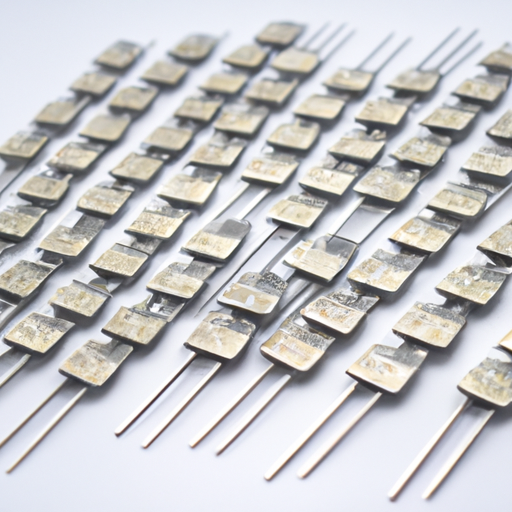
Thick film resistors are a crucial component in the world of electronics, playing a vital role in circuit design and functionality. These resistors are known for their reliability, versatility, and cost-effectiveness, making them a popular choice in various applications. In this article, we will explore the important product categories of thick film resistors, their characteristics, applications, advantages, challenges, and future trends.
II. Understanding Thick Film Resistors
A. Composition and Manufacturing Process
Thick film resistors are made from a mixture of conductive and non-conductive materials. The primary materials used include metal oxides, glass, and ceramic substrates. The manufacturing process involves several key steps:
1. **Materials Used**: The resistive layer is typically composed of a paste that includes metal oxides, which provide the necessary resistance properties. The substrate is usually made of ceramic, which offers excellent thermal stability.
2. **Screen Printing Technique**: The paste is applied to the substrate using a screen printing technique, allowing for precise control over the resistor's dimensions and resistance value.
3. **Firing Process**: After printing, the resistors undergo a firing process in a kiln, which helps to fuse the materials together and solidify the resistive layer.
B. Characteristics and Performance
Thick film resistors exhibit several key characteristics that make them suitable for a wide range of applications:
1. **Resistance Range**: They are available in a broad range of resistance values, typically from a few ohms to several megaohms.
2. **Tolerance Levels**: Thick film resistors can achieve tolerances ranging from ±1% to ±20%, depending on the specific type and application.
3. **Temperature Coefficient**: The temperature coefficient of thick film resistors can vary, but many are designed to operate effectively across a wide temperature range.
4. **Power Rating**: These resistors can handle various power ratings, making them suitable for both low-power and high-power applications.
III. Key Product Categories of Thick Film Resistors
A. Standard Thick Film Resistors
Standard thick film resistors are the most common type, widely used in various electronic devices. They are characterized by their reliability and cost-effectiveness.
1. **Description and Applications**: These resistors are typically used in consumer electronics, industrial equipment, and telecommunications.
2. **Common Specifications**: Standard thick film resistors usually have a resistance range of 1 ohm to 10 megaohms, with tolerances of ±5% to ±10%.
B. High Precision Thick Film Resistors
High precision thick film resistors are designed for applications that require tighter tolerances and better performance.
1. **Definition and Importance**: These resistors are essential in sensitive electronic applications where accuracy is critical, such as in medical devices and precision measurement equipment.
2. **Applications in Sensitive Electronics**: They are commonly used in instrumentation, aerospace, and automotive applications.
3. **Tighter Tolerances and Temperature Coefficients**: High precision resistors can achieve tolerances as tight as ±0.1% and have low temperature coefficients, ensuring stable performance over varying conditions.
C. High Power Thick Film Resistors
High power thick film resistors are designed to handle significant power loads, making them suitable for demanding applications.
1. **Characteristics and Applications**: These resistors can dissipate heat effectively and are often used in power electronics, automotive applications, and industrial machinery.
2. **Use in Power Electronics and Automotive Applications**: They are critical in applications such as motor control, power supplies, and electric vehicles, where high power handling is essential.
D. Surface Mount Thick Film Resistors
Surface mount technology (SMT) has revolutionized the electronics industry, and surface mount thick film resistors are a key component of this trend.
1. **Advantages of Surface Mount Technology (SMT)**: SMT allows for smaller, lighter, and more efficient circuit designs, enabling manufacturers to produce compact electronic devices.
2. **Applications in Modern Circuit Design**: These resistors are widely used in smartphones, tablets, and other compact electronic devices, where space is at a premium.
E. Specialty Thick Film Resistors
Specialty thick film resistors are designed for niche markets and specific applications.
1. **Description and Examples**: These may include resistors with unique properties, such as high voltage, high frequency, or specific environmental resistance.
2. **Applications in Niche Markets**: Specialty resistors are often used in telecommunications, aerospace, and military applications, where standard resistors may not meet the required specifications.
F. Network Resistors
Network resistors are a specific type of thick film resistor that combines multiple resistors into a single package.
1. **Definition and Functionality**: These resistors can be configured in various ways, such as in series or parallel, to achieve desired resistance values and configurations.
2. **Applications in Circuit Design**: Network resistors are commonly used in applications where space-saving and simplified circuit design are essential, such as in consumer electronics and automotive systems.
IV. Applications of Thick Film Resistors
Thick film resistors find applications across various industries, including:
A. Consumer Electronics
In consumer electronics, thick film resistors are used in devices such as televisions, smartphones, and audio equipment, where reliability and cost-effectiveness are crucial.
B. Automotive Industry
The automotive industry relies on thick film resistors for applications such as engine control units, power management systems, and safety features.
C. Industrial Equipment
In industrial settings, thick film resistors are used in machinery, control systems, and automation equipment, where durability and performance are essential.
D. Telecommunications
Thick film resistors play a vital role in telecommunications equipment, ensuring signal integrity and reliable performance in communication systems.
E. Medical Devices
In the medical field, thick film resistors are used in diagnostic equipment, monitoring devices, and other critical applications where precision and reliability are paramount.
V. Advantages of Thick Film Resistors
Thick film resistors offer several advantages that contribute to their widespread use:
A. Cost-Effectiveness
Thick film resistors are generally more affordable than other resistor technologies, making them an attractive option for manufacturers.
B. Versatility in Applications
Their wide range of resistance values, tolerances, and power ratings allows for versatility in various applications, from consumer electronics to industrial equipment.
C. Robustness and Reliability
Thick film resistors are known for their durability and reliability, making them suitable for demanding environments and applications.
D. Customization Options
Manufacturers can customize thick film resistors to meet specific requirements, allowing for tailored solutions in various applications.
VI. Challenges and Limitations
While thick film resistors have many advantages, they also face challenges and limitations:
A. Comparison with Other Resistor Technologies
1. **Thin Film Resistors**: Thin film resistors offer higher precision and lower temperature coefficients but are generally more expensive and less robust than thick film resistors.
2. **Wirewound Resistors**: Wirewound resistors provide high power ratings and precision but can be bulkier and less suitable for surface mount applications.
B. Environmental Considerations
Thick film resistors may not perform well in extreme environmental conditions, such as high humidity or temperature fluctuations, which can affect their reliability.
C. Performance Limitations in Extreme Conditions
In applications requiring high precision and stability, thick film resistors may not always meet the stringent requirements compared to other resistor technologies.
VII. Future Trends in Thick Film Resistor Technology
The future of thick film resistor technology is promising, with several trends emerging:
A. Innovations in Materials and Manufacturing
Advancements in materials science and manufacturing techniques are expected to enhance the performance and capabilities of thick film resistors.
B. Increasing Demand in Emerging Technologies
As industries such as electric vehicles, renewable energy, and IoT continue to grow, the demand for reliable and efficient thick film resistors will increase.
C. Sustainability and Eco-Friendly Practices
Manufacturers are increasingly focusing on sustainable practices, including the use of eco-friendly materials and processes in the production of thick film resistors.
VIII. Conclusion
In conclusion, thick film resistors are an essential component in modern electronics, with various product categories catering to different applications and requirements. From standard resistors to high precision and specialty options, their versatility, reliability, and cost-effectiveness make them a preferred choice in many industries. As technology continues to evolve, thick film resistors will play a crucial role in shaping the future of electronics, ensuring that they remain a vital part of circuit design and functionality.
IX. References
- Academic Journals
- Industry Reports
- Manufacturer Specifications and Data Sheets
This comprehensive overview of thick film resistors highlights their importance in electronics, the various product categories available, and their applications across multiple industries. Understanding these aspects can help engineers and designers make informed decisions when selecting resistors for their projects.


