What are the Product Features of High-Power Resistors?
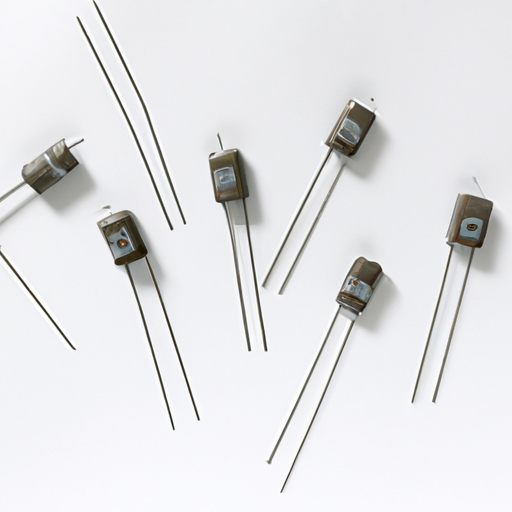
I. Introduction
High-power resistors are essential components in various electronic and electrical applications, designed to handle significant amounts of power while maintaining stability and reliability. These resistors are crucial in circuits where high currents and voltages are present, ensuring that devices operate safely and efficiently. This article will explore the key product features of high-power resistors, their classifications, materials, and applications, providing a comprehensive understanding of their importance in modern technology.
II. Understanding High-Power Resistors
A. Definition and Classification
High-power resistors are defined by their ability to dissipate large amounts of electrical energy without overheating. They are classified based on several parameters:
1. **Power Rating**: This indicates the maximum power the resistor can handle, typically measured in watts (W). High-power resistors can range from a few watts to several kilowatts.
2. **Resistance Value**: This is the measure of the resistor's opposition to current flow, expressed in ohms (Ω). High-power resistors can have a wide range of resistance values to suit different applications.
3. **Tolerance Levels**: Tolerance refers to the precision of the resistor's resistance value, usually expressed as a percentage. High-power resistors come with various tolerance levels, affecting their performance in critical applications.
B. Common Materials Used in High-Power Resistors
High-power resistors are constructed from various materials, each offering unique benefits:
1. **Wirewound**: These resistors are made by winding a metal wire around a core. They are known for their high power ratings and stability but can be larger in size.
2. **Thick Film**: Thick film resistors are created by applying a resistive paste onto a substrate. They are compact and suitable for surface mount applications, offering good thermal performance.
3. **Thin Film**: Thin film resistors are made by depositing a thin layer of resistive material on a substrate. They provide high precision and stability, making them ideal for applications requiring tight tolerances.
4. **Ceramic and Other Materials**: Ceramic materials are often used for their excellent thermal properties and durability. Other materials may include carbon and metal oxide, depending on the specific application requirements.
III. Key Product Features of High-Power Resistors
A. Power Rating
The power rating of a high-power resistor is a critical feature that determines its suitability for specific applications. It indicates the maximum power the resistor can safely dissipate without failure. In circuit design, selecting a resistor with an appropriate power rating is essential to prevent overheating and ensure reliable operation. For example, in power electronics, resistors with ratings of 100W or more are common, while in motor control applications, ratings can exceed 1kW.
B. Thermal Management
Effective thermal management is vital for high-power resistors, as excessive heat can lead to failure. High-power resistors utilize various heat dissipation mechanisms, including conduction, convection, and radiation. Thermal resistance is a key parameter that indicates how well a resistor can dissipate heat. Cooling methods, such as air cooling or liquid cooling, are often employed to enhance performance, especially in high-power applications where heat generation is significant.
C. Tolerance and Stability
Tolerance is a measure of how much the actual resistance value can deviate from the specified value. High-power resistors typically have tolerances ranging from 1% to 10%, with lower tolerances indicating higher precision. Stability over temperature and time is also crucial, as fluctuations can affect circuit performance. High-quality resistors maintain their resistance values under varying conditions, ensuring consistent operation in critical applications.
D. Voltage Rating
The voltage rating of a high-power resistor indicates the maximum voltage it can withstand without breaking down. This feature is particularly important in high-voltage applications, where resistors must handle significant electrical stress. For instance, in telecommunications and power distribution systems, resistors with voltage ratings of several kilovolts are common. Selecting a resistor with an appropriate voltage rating is essential to prevent arcing and ensure safety.
E. Size and Form Factor
The physical dimensions of high-power resistors can significantly impact circuit design and layout. Larger resistors may offer higher power ratings but can be challenging to integrate into compact designs. High-power resistors come in various form factors, including through-hole and surface mount options. The choice of mounting option affects the overall size of the circuit board and the thermal management strategy employed.
F. Frequency Response
Frequency response refers to how a resistor behaves at different frequencies. This feature is particularly significant in high-frequency applications, where resistors can exhibit inductive or capacitive effects. High-power resistors designed for RF applications must maintain stable performance across a wide frequency range. For example, wirewound resistors may be less suitable for high-frequency applications due to their inductive nature, while thin film resistors can provide better performance.
G. Environmental Considerations
High-power resistors must operate reliably under various environmental conditions. Key considerations include:
1. **Operating Temperature Range**: Resistors should function effectively within specified temperature limits to prevent failure.
2. **Humidity and Moisture Resistance**: High-power resistors may be exposed to humid environments, necessitating moisture-resistant designs to prevent corrosion and degradation.
3. **Chemical Resistance and Ruggedness**: In industrial applications, resistors may encounter harsh chemicals. Selecting materials that resist chemical attack is crucial for longevity and reliability.
H. Reliability and Lifespan
Reliability is a critical factor in high-power resistor selection, especially in applications where failure can lead to significant consequences. Factors affecting reliability include thermal cycling, mechanical stress, and environmental exposure. Testing standards and certifications, such as MIL-PRF-55182 for military applications, ensure that resistors meet stringent reliability criteria. In critical applications, such as aerospace and medical devices, the importance of reliability cannot be overstated.
IV. Applications of High-Power Resistors
High-power resistors find applications across various industries, including:
A. Industrial Applications
1. **Power Electronics**: High-power resistors are used in power converters, inverters, and other power electronic devices to manage energy flow and protect circuits.
2. **Motor Control**: In motor control systems, high-power resistors are employed for braking, load testing, and current sensing.
B. Automotive Applications
1. **Electric Vehicles**: High-power resistors play a vital role in electric vehicle systems, including battery management and regenerative braking.
2. **Battery Management Systems**: These resistors help regulate charging and discharging processes, ensuring optimal battery performance and longevity.
C. Telecommunications
1. **Signal Processing**: High-power resistors are used in signal processing circuits to manage power levels and prevent signal distortion.
2. **RF Applications**: In radio frequency applications, high-power resistors help control signal levels and protect sensitive components.
D. Consumer Electronics
1. **Audio Equipment**: High-power resistors are used in audio amplifiers to manage power levels and ensure sound quality.
2. **Power Supplies**: In power supply circuits, high-power resistors help regulate voltage and current, ensuring stable operation.
V. Conclusion
High-power resistors are indispensable components in modern electronics, providing essential features that ensure reliable performance in various applications. Understanding their key product features—such as power rating, thermal management, tolerance, voltage rating, size, frequency response, environmental considerations, and reliability—enables engineers and designers to select the right resistors for their specific needs. As technology continues to evolve, high-power resistor technology will likely advance, leading to even more efficient and reliable solutions for the challenges of tomorrow.
VI. References
1. "Resistor Basics: Understanding Resistor Types and Applications." Electronics Tutorials.
2. "High-Power Resistors: Design and Applications." IEEE Xplore.
3. "Thermal Management in High-Power Resistors." Journal of Electronic Materials.
4. "Reliability Testing of Resistors." International Journal of Electronics and Communications.
This blog post provides a comprehensive overview of high-power resistors, their features, and applications, making it a valuable resource for engineers, designers, and anyone interested in understanding these critical components.


