What Product Types Do Capacitors Include?
I. Introduction
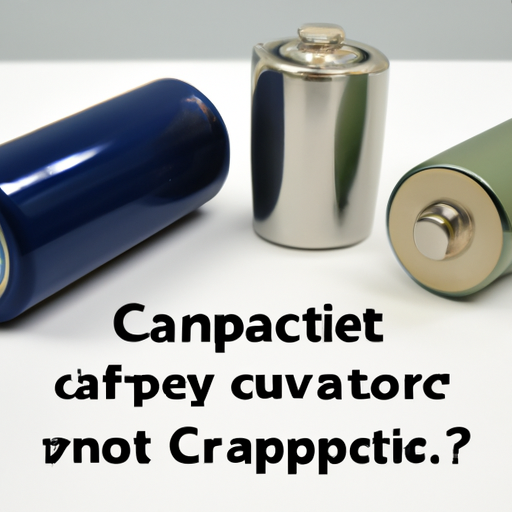
Capacitors are fundamental components in electronic circuits, playing a crucial role in energy storage, filtering, and signal processing. Defined as passive electrical devices that store electrical energy in an electric field, capacitors are essential for a wide range of applications, from simple circuits to complex electronic systems. This article aims to provide an overview of the various types of capacitors, their characteristics, applications, and the importance of selecting the right capacitor for specific needs.
II. Basic Principles of Capacitors
A. Explanation of Capacitance
Capacitance is the ability of a capacitor to store an electrical charge. It is measured in farads (F), with common subunits being microfarads (µF) and picofarads (pF). The capacitance value is determined by the surface area of the conductive plates, the distance between them, and the type of dielectric material used.
B. How Capacitors Store and Release Energy
When a voltage is applied across the terminals of a capacitor, an electric field is created, causing positive and negative charges to accumulate on the plates. This stored energy can be released when the circuit requires it, making capacitors vital for smoothing out voltage fluctuations and providing bursts of energy when needed.
C. Key Parameters
Key parameters to consider when selecting a capacitor include:
Voltage Rating: The maximum voltage the capacitor can handle without breaking down.
Capacitance Value: The amount of charge the capacitor can store.
Equivalent Series Resistance (ESR): A measure of the resistance encountered by the current flowing through the capacitor, affecting its efficiency and performance.
III. Types of Capacitors
Capacitors can be classified based on various criteria, including dielectric material, construction, and application.
A. Classification Based on Dielectric Material
1. **Ceramic Capacitors**
- **Characteristics**: Made from ceramic materials, these capacitors are known for their stability, low cost, and small size.
- **Applications**: Commonly used in high-frequency applications, decoupling, and filtering.
2. **Electrolytic Capacitors**
- **Characteristics**: These capacitors use an electrolyte as one of the plates, allowing for higher capacitance values in a smaller size.
- **Applications**: Widely used in power supply circuits and audio applications due to their ability to store large amounts of energy.
3. **Film Capacitors**
- **Characteristics**: Made from thin plastic films, these capacitors offer excellent stability and low ESR.
- **Applications**: Used in applications requiring high precision, such as timing circuits and audio equipment.
4. **Tantalum Capacitors**
- **Characteristics**: Known for their high capacitance-to-volume ratio and reliability, tantalum capacitors are polarized.
- **Applications**: Commonly found in compact electronic devices, such as smartphones and laptops.
5. **Supercapacitors**
- **Characteristics**: These capacitors can store a large amount of energy and have a very high capacitance value, often in the farad range.
- **Applications**: Used in energy storage systems, backup power supplies, and regenerative braking systems in electric vehicles.
6. **Mica Capacitors**
- **Characteristics**: Made from natural mica, these capacitors are known for their stability and low loss.
- **Applications**: Often used in high-frequency applications and precision circuits.
7. **Paper Capacitors**
- **Characteristics**: These capacitors use paper as the dielectric material and are less common today due to their size and lower performance.
- **Applications**: Historically used in audio and radio applications.
B. Classification Based on Construction
1. **Axial Capacitors**
- **Characteristics**: These capacitors have leads on either end, allowing for easy insertion into circuit boards.
- **Applications**: Commonly used in through-hole applications.
2. **Radial Capacitors**
- **Characteristics**: With leads coming out from the bottom, radial capacitors are compact and suitable for surface mounting.
- **Applications**: Frequently used in modern electronic devices.
3. **Surface Mount Capacitors**
- **Characteristics**: Designed for surface mounting on circuit boards, these capacitors are small and efficient.
- **Applications**: Widely used in compact electronic devices, such as smartphones and tablets.
C. Classification Based on Application
1. **Power Capacitors**
- **Characteristics**: Designed to handle high voltages and currents, these capacitors are essential for power factor correction.
- **Applications**: Used in industrial power systems and electrical grids.
2. **Signal Capacitors**
- **Characteristics**: These capacitors are optimized for low-loss performance in signal processing applications.
- **Applications**: Commonly found in audio and radio frequency circuits.
3. **Timing Capacitors**
- **Characteristics**: Used in timing circuits, these capacitors are selected for their stability and precision.
- **Applications**: Found in oscillators and timers.
IV. Specialized Capacitors
A. High-Voltage Capacitors
1. **Characteristics**: Designed to withstand high voltage levels, these capacitors are built with robust materials.
2. **Applications**: Used in power transmission systems and high-voltage equipment.
B. Low-ESR Capacitors
1. **Characteristics**: These capacitors have minimal equivalent series resistance, enhancing their efficiency.
2. **Applications**: Ideal for high-frequency applications and power supply circuits.
C. RF Capacitors
1. **Characteristics**: Optimized for radio frequency applications, these capacitors have low loss and high stability.
2. **Applications**: Used in RF amplifiers, oscillators, and filters.
D. Automotive Capacitors
1. **Characteristics**: Designed to withstand harsh automotive environments, these capacitors are durable and reliable.
2. **Applications**: Found in automotive electronics, including power management systems and infotainment units.
V. Emerging Technologies and Trends
A. Advancements in Capacitor Technology
Recent advancements in capacitor technology have led to the development of new materials and designs, improving performance and efficiency. Innovations such as nanotechnology and advanced dielectric materials are paving the way for capacitors with higher capacitance values and lower ESR.
B. The Role of Capacitors in Renewable Energy Systems
Capacitors play a vital role in renewable energy systems, such as solar and wind power. They are used for energy storage, smoothing out voltage fluctuations, and improving the efficiency of power conversion systems.
C. Future Trends in Capacitor Design and Applications
As technology continues to evolve, the demand for capacitors with higher performance and reliability will grow. Future trends may include the development of flexible capacitors for wearable technology, as well as capacitors designed for specific applications in electric vehicles and smart grids.
VI. Conclusion
In summary, capacitors are diverse components with various types and applications, each suited for specific needs. Understanding the different types of capacitors, their characteristics, and applications is crucial for selecting the right component for any electronic circuit. As technology advances, the landscape of capacitor technology will continue to evolve, offering new solutions for modern electronic challenges.
VII. References
For further reading on capacitors and their applications, consider exploring the following resources:
1. "Capacitors: Principles and Applications" - Academic Journal
2. "The Role of Capacitors in Modern Electronics" - Industry Report
3. "Advancements in Capacitor Technology" - Technology Review
4. "Capacitor Selection Guide" - Manufacturer's Handbook
By understanding the various types of capacitors and their applications, engineers and designers can make informed decisions that enhance the performance and reliability of their electronic systems.


