What are the Product Features of Capacitor Manufacturers?
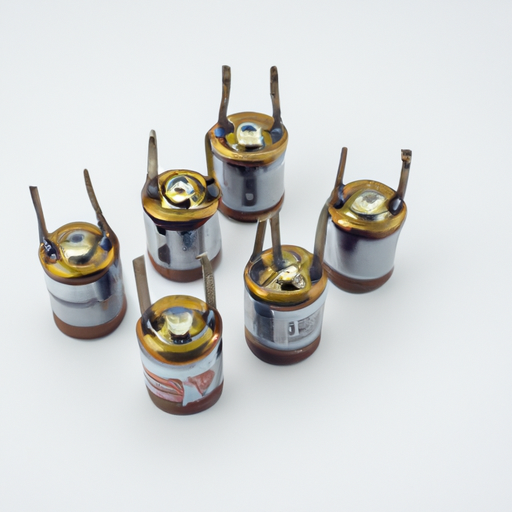
I. Introduction
Capacitors are fundamental components in electronic devices, serving as energy storage elements that can release energy quickly when needed. They play a crucial role in various applications, from smoothing out voltage fluctuations in power supplies to filtering signals in audio equipment. As the demand for electronic devices continues to grow, the role of capacitor manufacturers becomes increasingly significant. This blog post will explore the various types of capacitors, their key product features, manufacturing processes, and the latest innovations in the industry.
II. Types of Capacitors
Capacitors come in various types, each with unique characteristics and applications. Understanding these types is essential for selecting the right capacitor for a specific application.
A. Electrolytic Capacitors
Electrolytic capacitors are polarized capacitors that typically offer high capacitance values in a relatively small package. They are widely used in power supply circuits, audio equipment, and energy storage applications. Their primary characteristics include:
High Capacitance: Ranging from microfarads (µF) to thousands of microfarads.
Voltage Ratings: Commonly available in low to moderate voltage ratings.
B. Ceramic Capacitors
Ceramic capacitors are non-polarized capacitors made from ceramic materials. They are known for their stability and reliability, making them suitable for high-frequency applications. Key characteristics include:
Low Equivalent Series Resistance (ESR): Ideal for high-frequency applications.
Temperature Stability: Available in various temperature coefficients, making them versatile.
C. Film Capacitors
Film capacitors use a thin plastic film as the dielectric material. They are known for their excellent stability and low self-discharge rates. Their characteristics include:
Wide Capacitance Range: From picofarads (pF) to microfarads (µF).
High Voltage Ratings: Suitable for high-voltage applications.
D. Tantalum Capacitors
Tantalum capacitors are known for their high capacitance values and small size. They are often used in applications where space is limited. Key features include:
Stable Capacitance: Maintains capacitance over a wide range of temperatures.
High Reliability: Less prone to failure compared to other types.
E. Supercapacitors
Supercapacitors, also known as ultracapacitors, are designed for high energy storage and rapid charge/discharge cycles. They are increasingly used in applications like energy harvesting and backup power. Their characteristics include:
High Capacitance: Can store large amounts of energy.
Fast Charge/Discharge: Ideal for applications requiring quick bursts of energy.
III. Key Product Features of Capacitor Manufacturers
When evaluating capacitors, several key product features should be considered. These features can significantly impact the performance and reliability of electronic devices.
A. Capacitance Range
The capacitance range of a capacitor is a critical specification that defines its ability to store electrical energy. Capacitors are available in various capacitance values, from picofarads to farads, depending on the type. The choice of capacitance affects the performance of the circuit, making it essential for manufacturers to offer a wide range of options.
B. Voltage Rating
The voltage rating of a capacitor indicates the maximum voltage it can handle without failing. This specification is crucial for ensuring the safety and reliability of electronic devices. Manufacturers typically specify voltage ratings based on the capacitor's design and materials, and it is essential to select a capacitor with a voltage rating that exceeds the maximum voltage in the application.
C. Tolerance Levels
Tolerance refers to the allowable variation in capacitance from the specified value. Capacitors come with different tolerance levels, which can impact performance and reliability. A tighter tolerance means better performance in precision applications, while a wider tolerance may be acceptable for less critical uses.
D. Temperature Coefficient
The temperature coefficient indicates how a capacitor's capacitance changes with temperature. Different capacitor types exhibit varying temperature coefficients, which can affect their performance in different environments. Manufacturers often provide this information to help designers select the right capacitor for their applications.
E. Size and Form Factor
The physical dimensions of a capacitor can significantly influence its application. Smaller capacitors are often preferred in compact electronic devices, while larger capacitors may be necessary for high-capacity applications. Manufacturers offer various sizes and form factors to accommodate different design requirements.
F. Lifespan and Reliability
The lifespan of a capacitor is influenced by factors such as operating temperature, voltage, and environmental conditions. Manufacturers conduct rigorous testing to ensure their capacitors meet reliability standards. Understanding the expected lifespan and reliability of a capacitor is crucial for designers to avoid premature failures in their applications.
G. ESR (Equivalent Series Resistance)
Equivalent Series Resistance (ESR) is a measure of the resistance a capacitor presents to alternating current (AC). Low ESR is desirable in many applications, particularly in power supply circuits, as it reduces energy loss and heat generation. Different capacitor types exhibit varying ESR characteristics, and manufacturers often provide this information to help designers make informed choices.
H. Self-Discharge Rate
The self-discharge rate refers to how quickly a capacitor loses its stored charge when not in use. A low self-discharge rate is essential for applications where capacitors need to retain their charge for extended periods. Manufacturers typically specify self-discharge rates to help designers select capacitors that meet their application requirements.
IV. Manufacturing Processes and Quality Control
The manufacturing processes and quality control measures employed by capacitor manufacturers play a vital role in ensuring the performance and reliability of their products.
A. Overview of Manufacturing Techniques
Capacitor manufacturing involves several key processes, including:
Material Selection: The choice of dielectric materials, electrodes, and electrolytes is critical for determining the capacitor's performance.
Production Methods: Techniques such as winding, stacking, and layering are used to assemble capacitors, depending on the type.
B. Quality Assurance Practices
Quality assurance is essential in capacitor manufacturing to ensure that products meet industry standards and customer expectations. Manufacturers implement various testing protocols, including:
Electrical Testing: To verify capacitance, voltage ratings, and ESR.
Environmental Testing: To assess performance under different temperature and humidity conditions.
Certifications and adherence to industry standards, such as ISO and RoHS, further enhance the credibility of capacitor manufacturers.
V. Innovations and Trends in Capacitor Manufacturing
The capacitor manufacturing industry is continually evolving, driven by advancements in materials and technology. Some notable trends include:
A. Advances in Materials and Technology
Innovations in dielectric materials and electrode designs are leading to capacitors with improved performance characteristics, such as higher capacitance values and lower ESR.
B. Eco-Friendly Manufacturing Practices
As environmental concerns grow, many manufacturers are adopting eco-friendly practices, such as using sustainable materials and reducing waste in the production process.
C. Miniaturization and High-Capacity Designs
The trend toward miniaturization in electronics is driving the development of smaller, high-capacity capacitors that can fit into compact devices without sacrificing performance.
D. Smart Capacitors and IoT Applications
With the rise of the Internet of Things (IoT), manufacturers are exploring smart capacitors that can communicate with other devices, providing real-time data on performance and health.
VI. Conclusion
In conclusion, the product features of capacitor manufacturers are critical to the performance and reliability of electronic devices. Understanding the various types of capacitors, their key specifications, and the manufacturing processes involved can help designers make informed choices. As the industry continues to innovate, the future of capacitor technology looks promising, with advancements in materials, eco-friendly practices, and smart applications paving the way for new possibilities in electronics. By prioritizing quality and performance, capacitor manufacturers play a vital role in shaping the future of technology.


