How Does a Coupling Capacitor Work?
I. Introduction
In the realm of electronics, coupling capacitors play a pivotal role in ensuring the seamless transmission of signals between different stages of a circuit. A coupling capacitor is a component that allows alternating current (AC) signals to pass while blocking direct current (DC) signals. This functionality is crucial in various applications, from audio equipment to radio frequency circuits. In this article, we will explore the fundamental principles of capacitors, the specific role of coupling capacitors in circuits, their operational mechanisms, types, practical considerations, and their significance in modern electronics.
II. Basic Principles of Capacitors
A. Definition and Function of Capacitors
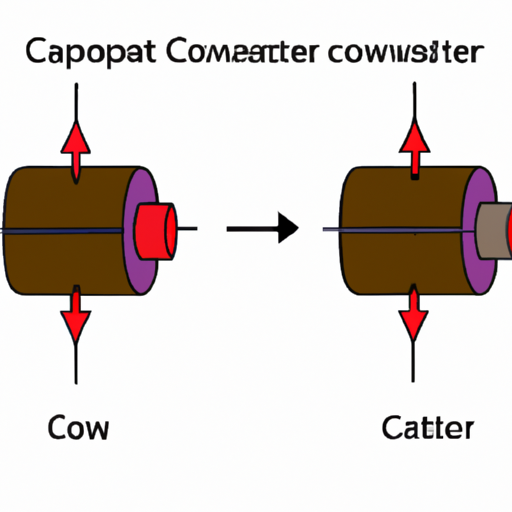
Capacitors are passive electronic components that store and release electrical energy. They consist of two conductive plates separated by an insulating material known as a dielectric. When a voltage is applied across the plates, an electric field is created, allowing the capacitor to store energy in the form of an electric charge.
B. Key Components of a Capacitor
1. **Plates**: The conductive plates are typically made of materials like aluminum or tantalum. The surface area of these plates directly influences the capacitance value; larger plates can store more charge.
2. **Dielectric Material**: The dielectric is the insulating material between the plates, which can be made from various substances, including ceramic, plastic, or electrolytic solutions. The type of dielectric affects the capacitor's performance, including its voltage rating and capacitance.
C. Capacitance and Its Measurement
Capacitance is the measure of a capacitor's ability to store charge, expressed in farads (F). A capacitor's capacitance is determined by the surface area of the plates, the distance between them, and the properties of the dielectric material. Common capacitance values in electronic circuits range from picofarads (pF) to microfarads (µF).
III. Role of Coupling Capacitors in Circuits
A. Purpose of Coupling Capacitors
1. **Signal Transmission**: Coupling capacitors are primarily used to transmit AC signals from one stage of a circuit to another while preventing DC components from passing through. This is essential in amplifiers and audio systems, where the integrity of the AC signal must be maintained.
2. **AC Coupling and DC Blocking**: By blocking DC voltage, coupling capacitors prevent unwanted shifts in operating points in amplifiers and other circuits. This ensures that the AC signal can be amplified without distortion caused by DC bias levels.
B. Applications in Various Electronic Devices
1. **Audio Equipment**: In audio systems, coupling capacitors are used to connect different stages of amplifiers, ensuring that the audio signal is transmitted without distortion while blocking any DC offset.
2. **Amplifiers**: In amplifiers, coupling capacitors are crucial for maintaining the desired frequency response and preventing DC bias from affecting the performance of the circuit.
3. **Radio Frequency Circuits**: Coupling capacitors are also used in RF circuits to couple signals between stages while blocking DC, allowing for effective signal processing and transmission.
IV. How Coupling Capacitors Work
A. Mechanism of Action
1. **Charging and Discharging Process**: When an AC signal is applied to a coupling capacitor, it begins to charge and discharge in response to the changing voltage. During the positive half-cycle of the AC signal, the capacitor charges, allowing current to flow through. During the negative half-cycle, the capacitor discharges, again allowing current to flow in the opposite direction. This process enables the AC signal to pass through while blocking any DC component.
2. **Impedance Characteristics**: The impedance of a coupling capacitor is frequency-dependent. At low frequencies, the impedance is high, which can impede the flow of the AC signal. As the frequency increases, the impedance decreases, allowing more of the AC signal to pass through. This characteristic is essential for ensuring that the desired frequency components of the signal are transmitted effectively.
B. Frequency Response and Its Significance
1. **High-Pass Filter Behavior**: Coupling capacitors exhibit high-pass filter behavior, allowing higher frequency signals to pass while attenuating lower frequency signals. This is particularly useful in audio applications, where low-frequency noise can be filtered out.
2. **Cut-off Frequency Determination**: The cut-off frequency of a coupling capacitor is determined by the capacitance value and the resistance of the load it is connected to. The formula for calculating the cut-off frequency (f_c) is given by:
\[
f_c = \frac{1}{2\pi RC}
\]
where R is the resistance and C is the capacitance. This relationship highlights the importance of selecting the appropriate capacitance value to achieve the desired frequency response in a circuit.
V. Types of Coupling Capacitors
A. Different Materials and Their Properties
1. **Ceramic Capacitors**: These capacitors are made from ceramic materials and are known for their stability and reliability. They are commonly used in high-frequency applications due to their low equivalent series resistance (ESR).
2. **Electrolytic Capacitors**: Electrolytic capacitors have a higher capacitance value and are often used in power supply circuits. However, they are polarized, meaning they must be connected in the correct direction to function properly.
3. **Film Capacitors**: Film capacitors are made from thin plastic films and are known for their excellent stability and low distortion. They are often used in audio applications where signal integrity is paramount.
B. Selection Criteria for Coupling Capacitors
1. **Voltage Rating**: The voltage rating of a capacitor must exceed the maximum voltage it will encounter in the circuit to prevent breakdown and failure.
2. **Capacitance Value**: The capacitance value should be chosen based on the desired cut-off frequency and the characteristics of the circuit.
3. **Frequency Response**: The type of capacitor selected should match the frequency response requirements of the application to ensure optimal performance.
VI. Practical Considerations
A. Impact of Coupling Capacitors on Circuit Performance
1. **Signal Integrity**: Coupling capacitors are essential for maintaining signal integrity in circuits. Poorly chosen capacitors can introduce distortion, noise, and unwanted frequency attenuation.
2. **Distortion and Noise**: The quality of the coupling capacitor can significantly affect the overall performance of the circuit. Low-quality capacitors may introduce noise and distortion, compromising the fidelity of the signal.
B. Common Issues and Troubleshooting
1. **Capacitor Leakage**: Over time, capacitors can develop leakage, which can lead to reduced performance and signal integrity. Regular testing and replacement of aging capacitors are essential for maintaining circuit performance.
2. **Incorrect Capacitance Values**: Using capacitors with incorrect capacitance values can lead to improper frequency response and signal distortion. It is crucial to verify the specifications of the capacitors used in a circuit.
VII. Conclusion
In summary, coupling capacitors are vital components in electronic circuits, facilitating the transmission of AC signals while blocking DC components. Their ability to function as high-pass filters and their diverse applications in audio equipment, amplifiers, and RF circuits underscore their importance in modern electronics. As technology advances, the development of new capacitor materials and designs will continue to enhance the performance and reliability of coupling capacitors, ensuring their relevance in future electronic applications.
VIII. References
For further exploration of coupling capacitors and their applications, consider the following resources:
1. "Capacitors: Principles and Applications" by John Smith
2. "The Art of Electronics" by Paul Horowitz and Winfield Hill
3. IEEE Journals on Capacitor Technology and Applications
4. Online resources and tutorials on capacitor theory and circuit design
By understanding the principles and applications of coupling capacitors, engineers and hobbyists alike can design more effective and reliable electronic circuits.


