What is the Role of Capacitors and the Current Status of the Industry?
I. Introduction
Capacitors are fundamental components in electrical and electronic systems, serving a variety of critical functions. Defined as passive electronic devices that store and release electrical energy, capacitors play a vital role in ensuring the smooth operation of countless devices we rely on daily. From consumer electronics to renewable energy systems, their importance cannot be overstated. As we delve into the current status of the capacitor industry, we will explore their functionality, types, applications, technological advancements, and the challenges and opportunities that lie ahead.
II. The Role of Capacitors
A. Basic Functionality
Capacitors serve several essential functions in electronic circuits:
1. **Energy Storage**: Capacitors store electrical energy in an electric field, allowing them to release it when needed. This property is crucial in applications where a quick burst of energy is required, such as in camera flashes or power supply smoothing.
2. **Voltage Regulation**: Capacitors help maintain a stable voltage level in circuits. They can absorb voltage spikes and release energy during dips, ensuring that sensitive components receive a consistent voltage.
3. **Filtering and Smoothing**: In power supply circuits, capacitors filter out noise and smooth out fluctuations in voltage, providing a cleaner power source for electronic devices.
B. Types of Capacitors
Capacitors come in various types, each suited for specific applications:
1. **Ceramic Capacitors**: Known for their small size and reliability, ceramic capacitors are widely used in high-frequency applications and are often found in consumer electronics.
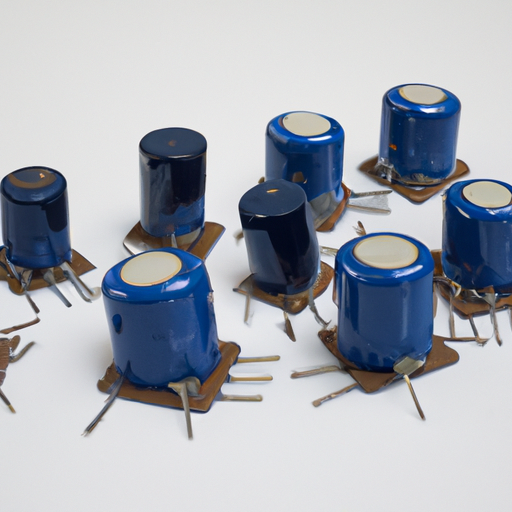
2. **Electrolytic Capacitors**: These capacitors offer high capacitance values and are commonly used in power supply circuits. However, they are polarized, meaning they must be connected in the correct direction.
3. **Film Capacitors**: Made from thin plastic films, these capacitors are known for their stability and low loss, making them ideal for audio and high-frequency applications.
4. **Tantalum Capacitors**: Tantalum capacitors are compact and offer high capacitance in a small package. They are often used in portable electronics and military applications.
5. **Supercapacitors**: Also known as ultracapacitors, these devices can store large amounts of energy and are used in applications requiring rapid charge and discharge cycles, such as in electric vehicles and renewable energy systems.
C. Applications of Capacitors
Capacitors find applications across various industries:
1. **Consumer Electronics**: From smartphones to televisions, capacitors are integral to the functioning of everyday devices, ensuring stable power supply and signal integrity.
2. **Automotive Industry**: Capacitors are used in various automotive applications, including power management systems, infotainment systems, and electric vehicle batteries.
3. **Renewable Energy Systems**: In solar and wind energy systems, capacitors help manage energy storage and improve the efficiency of power conversion.
4. **Industrial Machinery**: Capacitors are essential in industrial equipment for motor starting, power factor correction, and energy storage.
5. **Telecommunications**: Capacitors play a critical role in signal processing and power management in telecommunications infrastructure.
III. Technological Advancements in Capacitor Design
The capacitor industry has seen significant technological advancements in recent years:
A. Miniaturization and Increased Capacitance
As electronic devices become smaller and more powerful, the demand for miniaturized capacitors with higher capacitance values has surged. Manufacturers are developing new designs that allow for greater energy storage in smaller packages, enabling the creation of compact and efficient devices.
B. Development of New Materials
Innovations in materials science have led to the development of advanced dielectric materials that enhance the performance of capacitors. These materials improve energy density, temperature stability, and overall reliability, making capacitors more effective in various applications.
C. Innovations in Manufacturing Processes
Advancements in manufacturing techniques, such as automated production lines and precision engineering, have improved the consistency and quality of capacitors. These innovations reduce production costs and enhance the scalability of capacitor manufacturing.
D. Smart Capacitors and IoT Integration
The rise of the Internet of Things (IoT) has prompted the development of smart capacitors that can communicate with other devices. These capacitors can monitor their performance, predict failures, and optimize energy usage, contributing to more efficient and intelligent systems.
IV. Current Status of the Capacitor Industry
A. Market Overview
The global capacitor market has experienced steady growth, driven by the increasing demand for electronic devices and renewable energy solutions. According to industry reports, the market size is projected to reach several billion dollars in the coming years, with key players including companies like Murata Manufacturing, Vishay Intertechnology, and KEMET Corporation leading the way.
B. Challenges Facing the Industry
Despite its growth, the capacitor industry faces several challenges:
1. **Supply Chain Disruptions**: The COVID-19 pandemic highlighted vulnerabilities in global supply chains, affecting the availability of raw materials and components. Manufacturers are now seeking to diversify their supply sources to mitigate these risks.
2. **Environmental Regulations and Sustainability**: As environmental concerns grow, the capacitor industry is under pressure to adopt sustainable practices. This includes developing eco-friendly materials and recycling programs to reduce waste.
3. **Competition from Alternative Technologies**: Emerging technologies, such as solid-state batteries and advanced energy storage systems, pose competition to traditional capacitors. The industry must innovate to remain relevant in a rapidly evolving technological landscape.
C. Future Outlook
The future of the capacitor industry looks promising, with several emerging trends:
1. **Emerging Markets and Opportunities**: As developing countries continue to industrialize and adopt new technologies, the demand for capacitors is expected to rise. This presents significant opportunities for manufacturers to expand their market presence.
2. **Predictions for Technological Advancements**: Continued research and development in capacitor technology will likely lead to breakthroughs in energy density, efficiency, and integration with smart technologies.
3. **The Role of Capacitors in Future Energy Solutions**: Capacitors will play a crucial role in the transition to renewable energy sources, helping to stabilize power grids and improve energy storage solutions.
V. Conclusion
In summary, capacitors are indispensable components in modern electrical and electronic systems, serving critical functions that enhance the performance and reliability of devices across various industries. The current status of the capacitor industry reflects a dynamic landscape characterized by technological advancements, market growth, and emerging challenges. As we look to the future, capacitors will continue to evolve, playing a vital role in shaping the technologies that drive our society forward. Their importance in energy solutions, consumer electronics, and industrial applications underscores their enduring relevance in an increasingly interconnected world.


