Resistor's Main Function: Components and Similar Recommendations
I. Introduction
A. Definition of a Resistor
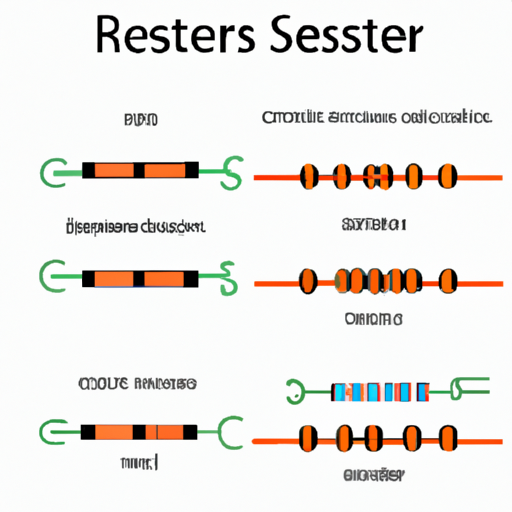
A resistor is a fundamental electronic component that limits the flow of electric current in a circuit. It is characterized by its resistance value, measured in ohms (Ω), which determines how much it resists the current. Resistors are passive components, meaning they do not generate energy but instead dissipate it in the form of heat.
B. Importance of Resistors in Electronic Circuits
Resistors play a crucial role in electronic circuits by controlling current flow, dividing voltages, and protecting sensitive components from excessive current. They are essential in various applications, from simple circuits to complex electronic devices. Without resistors, circuits would be prone to damage and malfunction due to uncontrolled current levels.
C. Overview of the Article's Purpose
This article aims to provide a comprehensive understanding of resistors, their functions, and their importance in electronic circuits. Additionally, we will explore components similar to resistors, such as capacitors, inductors, diodes, and transistors, and discuss how to choose the right component for specific applications.
II. Understanding Resistors
A. Basic Function of Resistors
1. Current Limiting
One of the primary functions of a resistor is to limit the amount of current flowing through a circuit. By introducing resistance, it ensures that the current remains within safe levels, protecting other components from damage. For example, in LED circuits, resistors are used to prevent excessive current that could burn out the LED.
2. Voltage Division
Resistors can also be used to create voltage dividers, which allow for the distribution of voltage across multiple components. This is particularly useful in applications where different components require different voltage levels. By arranging resistors in series, designers can achieve the desired voltage output.
B. Types of Resistors
1. Fixed Resistors
Fixed resistors have a constant resistance value and are the most common type used in circuits. They come in various resistance values and power ratings, making them versatile for different applications.
2. Variable Resistors (Potentiometers)
Variable resistors, or potentiometers, allow users to adjust the resistance value manually. They are commonly used in applications such as volume controls in audio equipment, where users can change the resistance to adjust the sound level.
3. Specialty Resistors (Thermistors, Photoresistors)
Specialty resistors have unique properties that make them suitable for specific applications. Thermistors change resistance with temperature, making them ideal for temperature sensing. Photoresistors, or light-dependent resistors (LDRs), change resistance based on light intensity, commonly used in light-sensing applications.
C. Key Specifications
1. Resistance Value (Ohms)
The resistance value is the primary specification of a resistor, indicating how much it resists current flow. It is crucial to select the correct resistance value for a given application to ensure proper circuit functionality.
2. Power Rating (Watts)
The power rating indicates the maximum amount of power a resistor can dissipate without overheating. Exceeding this rating can lead to resistor failure, so it is essential to choose a resistor with an appropriate power rating for the application.
3. Tolerance
Tolerance refers to the allowable variation in resistance value. It is expressed as a percentage and indicates how much the actual resistance can differ from the stated value. For precision applications, selecting resistors with lower tolerance values is critical.
III. The Role of Resistors in Circuits
A. Series and Parallel Configurations
1. Series Resistor Circuits
In a series configuration, resistors are connected end-to-end, and the total resistance is the sum of the individual resistances. This configuration is useful for applications requiring a specific total resistance or voltage division.
2. Parallel Resistor Circuits
In a parallel configuration, resistors are connected across the same voltage source, and the total resistance is less than the smallest individual resistance. This setup is beneficial for applications requiring current sharing or redundancy.
B. Applications in Different Circuits
1. Voltage Divider Circuits
Voltage dividers use resistors to produce a specific output voltage from a higher input voltage. This is commonly used in sensor applications where a specific voltage level is needed for further processing.
2. Current Limiting Circuits
Resistors are often used in current limiting circuits to protect components like LEDs and transistors from excessive current. By selecting the appropriate resistor value, designers can ensure that the current remains within safe limits.
3. Signal Conditioning Circuits
In signal conditioning circuits, resistors are used to filter and shape signals. They can be combined with capacitors and inductors to create filters that remove unwanted frequencies or noise from signals.
IV. Components Similar to Resistors
A. Capacitors
1. Function and Applications
Capacitors store and release electrical energy, making them essential for smoothing out voltage fluctuations and filtering signals. They are commonly used in power supply circuits and timing applications.
2. Comparison with Resistors
While resistors limit current flow, capacitors allow for the temporary storage of energy. In certain applications, resistors and capacitors work together to create RC circuits that control timing and filtering.
B. Inductors
1. Function and Applications
Inductors store energy in a magnetic field when current flows through them. They are commonly used in power supplies, filters, and oscillators.
2. Comparison with Resistors
Inductors oppose changes in current, while resistors oppose current flow. Both components are essential in controlling current and voltage in circuits, but they operate based on different principles.
C. Diodes
1. Function and Applications
Diodes allow current to flow in one direction only, making them crucial for rectification and signal modulation. They are widely used in power supply circuits and signal processing.
2. Comparison with Resistors
While resistors limit current, diodes control the direction of current flow. Both components are vital for circuit functionality, but they serve different purposes.
D. Transistors
1. Function and Applications
Transistors act as switches or amplifiers in circuits, allowing for the control of current flow. They are fundamental in digital circuits and signal processing.
2. Comparison with Resistors
Transistors can control larger currents based on smaller input signals, while resistors simply limit current flow. Both components are essential for circuit design, but transistors offer more functionality.
V. Choosing the Right Component
A. Factors to Consider
1. Circuit Requirements
When selecting components, it is essential to consider the specific requirements of the circuit, including voltage levels, current ratings, and desired functionality.
2. Component Specifications
Understanding the specifications of each component, such as resistance value, power rating, and tolerance, is crucial for ensuring proper circuit operation.
B. Recommendations for Specific Applications
1. Low-Power Applications
For low-power applications, fixed resistors with appropriate resistance values and power ratings are typically sufficient. Consider using precision resistors for applications requiring accurate measurements.
2. High-Power Applications
In high-power applications, it is essential to select resistors with higher power ratings to prevent overheating. Wire-wound resistors are often recommended for their ability to handle higher power levels.
3. Signal Processing Applications
For signal processing applications, consider using variable resistors or potentiometers to allow for adjustments in resistance. Additionally, combining resistors with capacitors and inductors can enhance signal conditioning.
VI. Conclusion
A. Recap of Resistor Functions and Importance
Resistors are vital components in electronic circuits, serving essential functions such as current limiting and voltage division. Their various types and specifications make them versatile for a wide range of applications.
B. Summary of Similar Components and Their Roles
Components such as capacitors, inductors, diodes, and transistors share similarities with resistors but serve distinct purposes in circuit design. Understanding these differences is crucial for selecting the right components for specific applications.
C. Final Thoughts on Component Selection in Circuit Design
Choosing the right components is essential for successful circuit design. By understanding the functions and specifications of resistors and similar components, designers can create efficient and reliable electronic circuits.
VII. References
A. Suggested Reading Materials
1. "The Art of Electronics" by Paul Horowitz and Winfield Hill
2. "Electronic Principles" by Albert Malvino and David Bates
B. Online Resources for Further Learning
1. Electronics Tutorials: [www.electronicstutorials.com](http://www.electronicstutorials.com)
2. All About Circuits: [www.allaboutcircuits.com](http://www.allaboutcircuits.com)
This blog post provides a comprehensive overview of resistors, their functions, and their importance in electronic circuits, along with a discussion of similar components and guidance on component selection. Understanding these concepts is essential for anyone involved in circuit design and electronics.


